
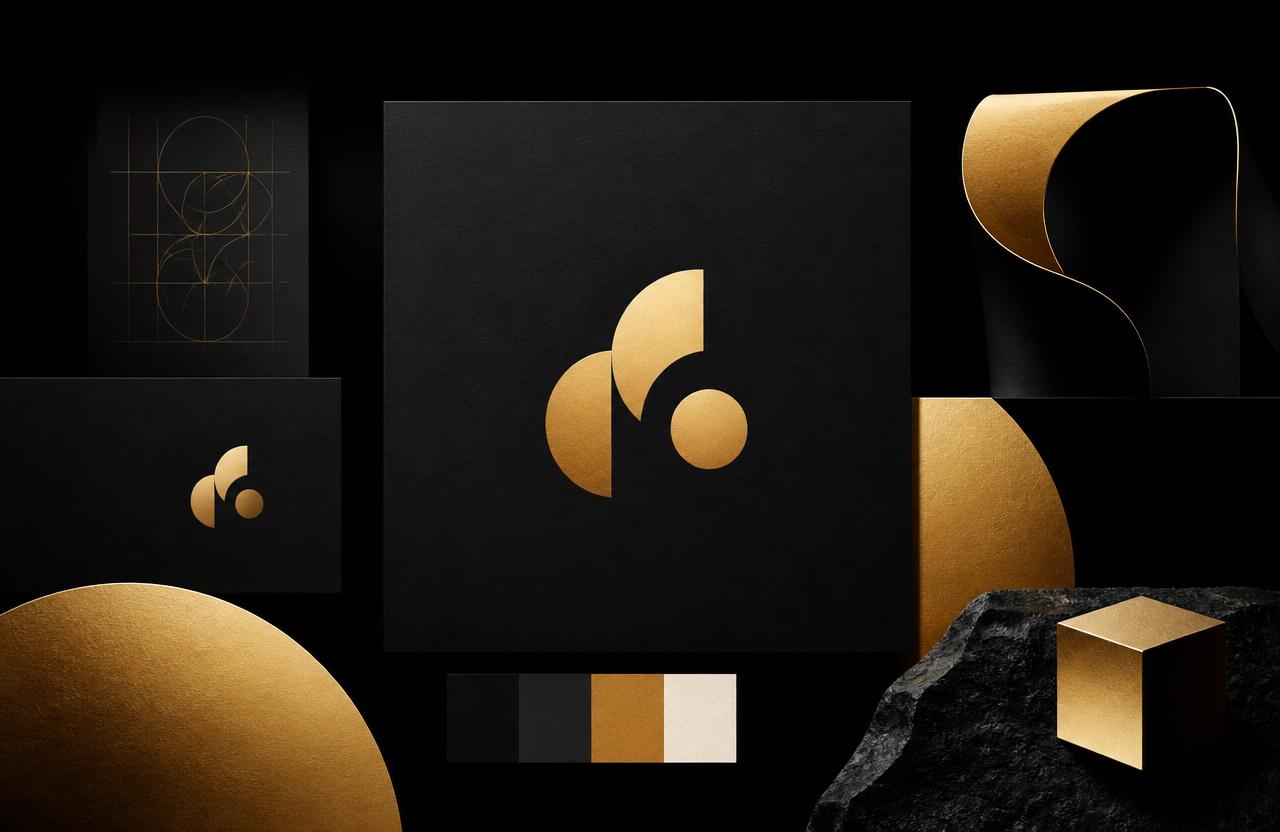
Most founders think they're building a brand when they're really just decorating a business. They pick a name, commission a logo, choose two colours they like, and assume the brand is finished. Then they wonder why customers don't remember them, why they keep competing on price, and why every marketing campaign feels like starting from zero. A brand isn't the logo. It's the entire impression your company leaves behind — the feeling people carry with them when you are not in the room.
In 2026, that impression is formed faster and across more touchpoints than ever: a three-second scroll past your ad, a glance at your website on a phone, a single reply in the DMs, the unboxing of a product. Building a brand intentionally is the single highest-leverage thing most founders can do — and it's the step most people rush past on the way to selling. This guide walks through the exact framework we use at iBuildify to take a brand from a blank page to something customers recognise, trust, and choose on purpose.
What a Brand Actually Is
Strip away the jargon and a brand is a reputation at scale. It's the shortcut in a customer's mind that answers one question instantly: "Is this for me, and can I trust it?" When that shortcut is strong, you spend less to acquire customers, charge more for the same work, and survive mistakes that would sink a no-name competitor.
It helps to separate three layers that people constantly confuse. Brand strategy is the thinking — who you serve, what you stand for, and why you're different. Brand identity is the expression — the logo, colours, type, and visuals that make the strategy visible. Brand experience is the proof — every interaction that either confirms or contradicts the promise. Great brands keep all three in alignment. Weak brands have a beautiful identity sitting on top of no strategy and an inconsistent experience.
Your brand is what people say about you when you're not in the room. Everything else is just decoration.
Step 1: Get Ruthlessly Clear on Who You Serve
Branding starts with subtraction, not addition. The fastest way to become forgettable is to try to appeal to everyone. The fastest way to become magnetic is to become the obvious choice for a specific group of people who share a specific problem.
Before you touch a single design decision, write down who you are genuinely the best option for. Not who you'd accept money from — who you can serve better than anyone else. Define them by situation and desire, not just demographics.
- What problem are they trying to solve, in their own words?
- What have they already tried that didn't work?
- What do they secretly fear or want that they rarely say out loud?
- Where do they spend attention, and who do they already trust?
When you can describe your customer this precisely, your brand voice, your visuals, and your offers practically write themselves. Vague audiences produce vague brands.
Step 2: Define Your Positioning
Positioning is the space you own in the customer's mind. It's the answer to: "Why you instead of the dozen alternatives, including doing nothing?" Strong positioning is built on a real, defensible difference — not a louder version of what everyone else says.
The positioning statement
A simple template forces the clarity most brands avoid: For [specific customer] who [specific need], [your brand] is the [category] that [single biggest differentiator] — unlike [the main alternative]. If you can't fill that in without using filler words like "quality," "innovative," or "customer-focused," you don't have positioning yet. You have a placeholder.
Find your edge
- A different mechanism — you solve the problem in a way others can't or won't.
- A different audience — you serve a niche the big players ignore.
- A different experience — you make the process dramatically easier or more premium.
- A different belief — you stand for something your customers care about.
Step 3: Build the Brand Strategy Foundation
With your customer and position defined, lock in the strategic pillars that every future decision will reference. These rarely change, which is exactly why they're worth the effort.
- 1Purpose — why the company exists beyond making money.
- 2Mission — what you're doing about it right now.
- 3Values — the three to five principles that guide how you behave.
- 4Personality — the human traits your brand consistently expresses.
- 5Promise — the one thing customers can always count on from you.
Document these in a single one-page brand brief. It becomes the reference point for designers, copywriters, hires, and every "does this feel like us?" decision down the line.
Step 4: Create the Visual Identity
Only now — after the strategy is set — do you design. This order matters. When identity comes first, you get pretty work that means nothing. When strategy comes first, every visual choice has a reason behind it.
The core identity system
- Logo — a primary mark plus simplified variations for small sizes and tight spaces.
- Colour — a disciplined palette with a clear hierarchy, not a rainbow.
- Typography — one or two typefaces with defined roles for headlines and body.
- Imagery — a consistent photographic or illustrative style and art-direction rules.
- System — spacing, layouts, and components that keep everything feeling cohesive.
The goal isn't to be the most beautiful brand in your category. It's to be the most recognisable and the most consistent. A simple identity applied flawlessly beats an elaborate one applied randomly every single time.
Step 5: Develop Your Brand Voice
How you sound is as much your brand as how you look — and it shows up far more often. Every caption, email, product label, and support reply is a chance to either reinforce your personality or dilute it. Pick three to four voice attributes (for example: confident, warm, direct, occasionally playful) and define what each one means and doesn't mean in practice.
The simplest test: read your copy out loud. If it sounds like a faceless corporation, it's wrong. If it sounds like a specific, likeable human who knows what they're talking about, you're close.
Step 6: Make It Consistent Everywhere
Consistency is where most brands quietly fall apart. The strategy is solid, the identity is sharp — and then the website, the Instagram grid, the invoices, and the email signatures all look like they belong to different companies. Repetition is what turns recognition into trust, and trust into preference.
- Website and landing pages use the same colours, type, and voice.
- Social profiles share consistent avatars, banners, and grid styling.
- Email templates, signatures, and newsletters match the identity.
- Product, packaging, and physical materials feel like the same brand.
- Customer support replies carry the same tone as the marketing.
A practical tip: build a lightweight brand kit — logos, colour codes, fonts, and three example posts — and give it to everyone who touches the brand. The faster people can stay on-brand, the more consistent you'll be.
Common Branding Mistakes to Avoid
- Designing the logo before defining the strategy.
- Trying to appeal to everyone and connecting with no one.
- Copying a competitor instead of finding your own edge.
- Rebranding every time you get bored instead of staying consistent.
- Treating the brand as a one-time project rather than an ongoing asset.
For a deeper look at the science behind why some brands stick, read The Psychology Behind Great Branding. And when you're ready to translate your brand into a site that actually converts, How to Build a Website That Converts picks up exactly where this leaves off.
Conclusion
Building a brand in 2026 isn't about chasing trends or out-spending competitors. It's about clarity: knowing exactly who you serve, what you stand for, and how you show up — and then repeating that with discipline until the market can't imagine the category without you. The founders who win aren't the ones with the biggest budgets. They're the ones who decided what they stand for and refused to blur it.
Start with strategy, express it through a consistent identity, and prove it through every experience you deliver. Do that, and your brand stops being a cost and starts being your most valuable, compounding asset.
Frequently Asked Questions
How long does it take to build a brand?
The strategic foundation — audience, positioning, values, and voice — can be defined in one to three weeks of focused work. A complete visual identity typically takes two to six weeks depending on scope. But a brand truly takes hold over months of consistent application. The thinking is fast; the consistency is what compounds over time.
Do I need a brand before I start selling?
You don't need a polished identity to make your first sales, but you do need clear positioning — knowing who you serve and why you're different. Start with strategy, sell, learn from real customers, then invest in the visual identity once you've validated demand. Strategy first, design second.
What's the difference between a brand and a logo?
A logo is a single visual mark that identifies your company. A brand is the entire reputation, feeling, and experience associated with your business — strategy, identity, voice, and every customer interaction combined. The logo is one small expression of the brand, not the brand itself.
How much should a small business spend on branding?
It depends on stage and ambition. Early on, invest most of your effort in strategy and a clean, consistent identity rather than expensive extras. As you grow and brand becomes a competitive advantage, it's worth investing more in a complete system, premium assets, and professional execution that protects your positioning.
Written by the iBuildify Team
Helping founders transform ideas into successful businesses through branding, technology, AI, creative strategy, and business systems.